cable tray manufacturers: Best Suppliers, Types and Key Standards
Did you know that an estimated 70% of unexpected power outages and industrial data interruptions stem not from equipment failure, but from poorly managed cable routing systems? In modern infrastructure and construction projects, cable management systems are far more than structural channels for organizing wire runs; they form the backbone of electrical and telecom network protection, ensuring operational efficiency and structural durability. High-performance cable support systems mitigate mechanical load stress, resist harsh environmental exposure, and optimize thermal dissipation—guaranteeing overall system safety and continuous power and data delivery.
This engineering guide examines the primary containment types produced by leading cable tray manufacturers, detailing their technical specifications, manufacturing standards, and structural selection criteria. Additionally, we break down essential engineering principles to help you select the ideal containment solution for your project, backed by a comparative evaluation of top market suppliers.
Primary Types of Cable Management Systems
Leading cable tray manufacturers produce various containment designs to accommodate distinct mechanical load capacities, indoor or outdoor ambient conditions, and cable ventilation requirements. Below is an overview of standard, engineered configurations:
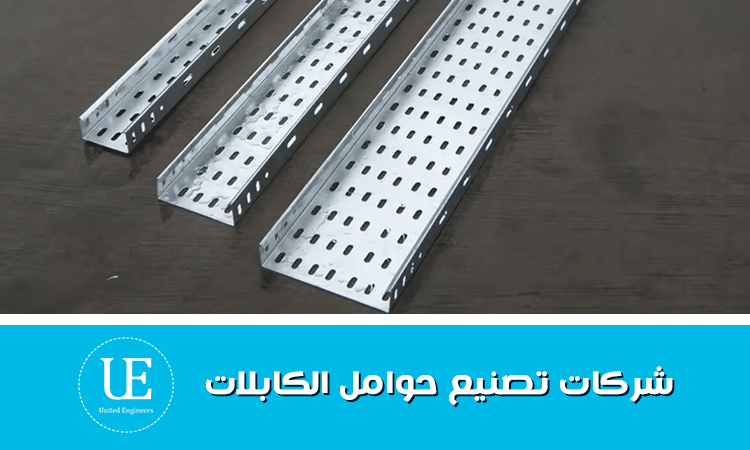
Perforated Cable Tray
Features a regular pattern of bottom perforations that facilitate balanced air circulation while providing continuous bottom support.
- Primary Application: Widely supplied by electrical cable tray manufacturers for control cables, signal wiring, and low-to-medium voltage power distribution in commercial buildings and industrial plants.
- Key Advantage: Simplifies cable securing and bundling using standard cable ties anchored directly through the bottom perforations.
If you want to learn more about electrical cables and their different applications, check out types of cable trays for useful information and key details.
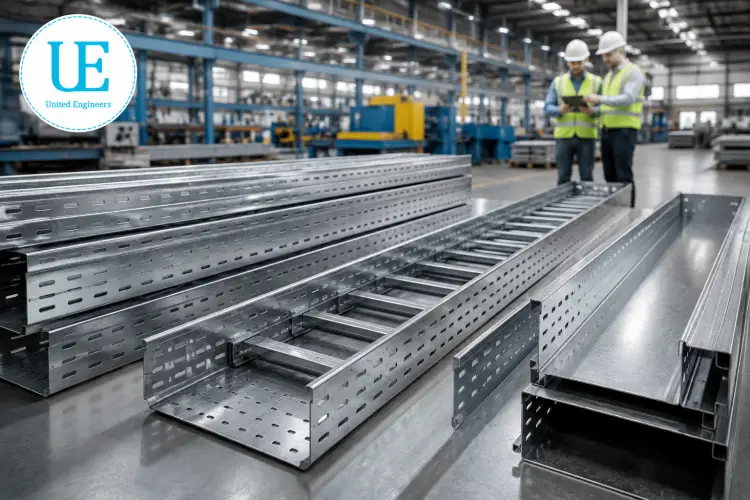
Ladder Cable Tray
Constructed with two longitudinal side rails connected by transverse rungs, mimicking a traditional ladder design to provide maximum ventilation.
- Primary Application: High-voltage power cables and heavy cross-section conductors that generate substantial operating heat.
- Key Advantage: Exceptional defense against moisture and dust accumulation, combined with effortless maintenance access and pulling efficiency.
Solid Bottom Cable Tray
A fully enclosed, non-ventilated channel designed to deliver maximum mechanical and environmental isolation.
- Primary Application: Specialized cable tray manufacturers supply these for sensitive telecommunications, fiber optics, and applications requiring complete protection from ambient dust, falling debris, oil drips, or electromagnetic interference (EMI).
Wire Mesh Cable Tray
Fabricated from welded high-strength galvanized steel wire formed into a grid structure, characterized by lightweight construction and easy jobsite hand-shaping.
- Primary Application: Data centers, telecom routing facilities, and elevated routing above suspended ceilings.
Comparative Analysis: United Engineers vs. Elsewedy Cable Trays
When evaluating suppliers and cable tray manufacturers in Egypt for consultant approvals and jobsite execution, project engineers and contractors evaluate key technical and operational parameters:
1. United Engineers Factory
Manufacturing Flexibility: united engineers specializes in fabricating custom cable trays and trunking systems tailored to precise engineering dimensions and complex project architecture.
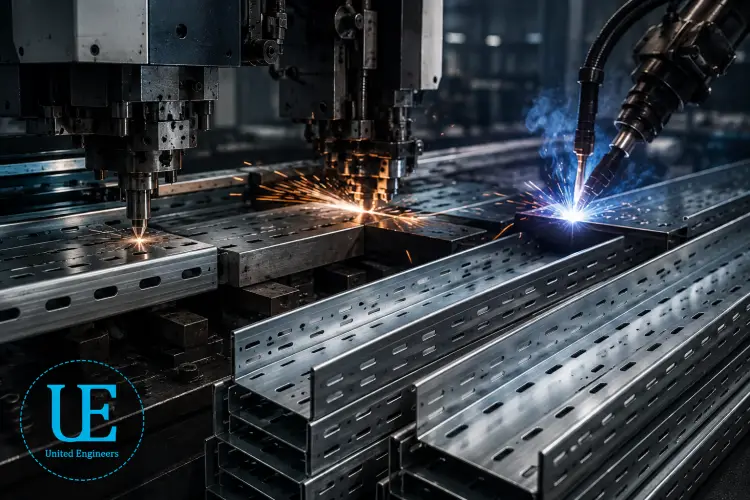
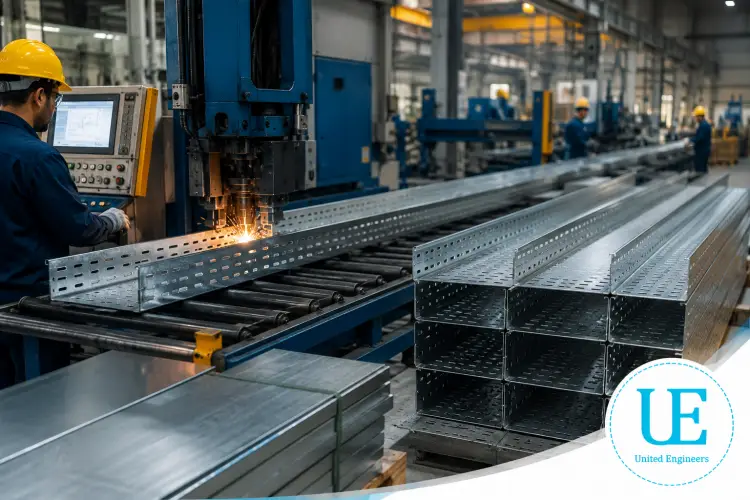
Precision Tooling: Utilizing advanced CNC punching and bending machinery, united engineers guarantees exact perforation spacing, precise alignment, and minimal material waste.
System Integration: Offers a fully compatible line of engineered Cable Tray accessories—including couplers, covers, horizontal/vertical elbows, tees, and heavy-duty structural supports—manufactured to identical quality standards for fast site assembly.
2. Elsewedy Cable Trays
Standard Off-the-Shelf Availability: Mass-produced standard sizes are readily available in stock for rapid off-the-shelf delivery.
Pre-existing Approvals: Possesses widespread consultant approvals across standard national public works and conventional builds.
Expert Takeaway: While standard off-the-shelf products serve conventional builds well, united engineers provides high-level engineering control for complex projects requiring rapid delivery of non-standard dimensions or specialized surface treatments (such as acid-resistant electrostatic powder coating) directly from the factory at competitive rates. To review product lines and consultant credentials, visit the official united engineers digital portal for technical catalogs and past project references.
For more information about electrical cable types and specifications, read cable tray price list egypt to explore the key points that can help you choose the right product.
Cable Tray Dimensions and Sizing Parameters
Industrial cable tray manufacturers produce containment systems across a wide range of standard dimensions to satisfy diverse electrical and industrial requirements. Proper size selection depends on total cable counts, overall outside diameters, future expansion allowances, and total mechanical load capacities.
|
Specification Parameter |
Standard Range / Metric |
Engineering Selection Criteria |
|
Tray Width |
100 mm to 900 mm |
Selected to accommodate total cable volume side-by-side with required thermal spacing. |
|
Side Rail Depth |
25 mm to 150 mm |
Provides adequate side-rail containment and structural rigidity against sag. |
|
Load Capacity |
Calculated per kg/m |
Determined by total weight of cables, ambient wind/ice loads, and support span distances. |
|
Custom Sizing |
Excel / Software calculated |
Engineered to meet exact project specifications and dynamic site layouts. |
|
Global Standards |
NEMA VE 1 / IEC 61537 |
Ensures full structural compliance, ground continuity, and operational safety. |
Specialized Containment Solutions
Evaluating alternatives like PVC trays or rigid trunking systems depends on environmental exposure and mechanical demands. united engineers, a premier name among cable tray manufacturers, outlines these specialized applications:
Cable Drag Chains (Dynamic Motion Systems)
In automated production lines and moving machinery (such as gantry cranes, CNC equipment, and automated storage systems), dynamic drag chains protect moving hydraulic hoses and power lines from mechanical wear and twisting:
- Jobsite Safety: Prevents cable snagging within moving machine parts, eliminating unexpected operational downtime.
- Extended Cable Service Life: Controls maximum bending radiuses, dramatically reducing daily mechanical fatigue.
- Simplified Maintenance: Articulated snap-open designs allow rapid cable replacement without dismantling adjacent runs.
You can also explore cable tray design to discover more useful details and solutions related to electrical cables and different electrical systems.
Cable Trunking Systems (Enclosed Channels)
Fabricated from non-perforated sheet steel or aluminum, enclosed cable trunking fully isolates sensitive power and low-current (data/telecom) lines:
- Complete Environmental Isolation: Protects internal wiring against heavy dust, dirt, and water ingress in outdoor or harsh industrial settings.
- EMI Mitigation: Attenuates electromagnetic interference between adjacent high-power lines and sensitive data circuits.
- Clean Architectural Aesthetic: Highly favored in healthcare facilities, laboratories, and commercial offices where exposed cabling is prohibited.
To access updated technical datasheets and current market options across Cable Tray Egypt offerings, review certified supplier documentation or request a dedicated Cable Tray Price list egypt.
Cost Factors Influencing Cable Tray Prices in Egypt
Contractors and engineering firms require accurate financial estimates for procurement planning. The per-meter cost of containment systems within the Egyptian market is driven by several primary variables:
- Global Raw Steel Rates: Direct fluctuations in international cold-rolled or hot-rolled steel coil markets.
- Galvanization Type and Thickness: Electro-galvanized coatings carry a lower cost compared to Hot-Dip Galvanizing (HDG), which provides multi-decade corrosion resistance.
- Dimensions and Material Thickness: Increasing tray width, side height, or steel gauge (ranging from 0.8 mm to 2.0 mm) increases total steel mass per meter.
- Accessories and Mounting Hardware: Comprehensive project costs must include splice plates, covers, fittings, reducers, and structural support brackets.
Given routine fluctuations in raw material markets, consulting directly with experienced cable tray manufacturers ensures an accurate project quote based on your specific bill of quantities (BOQ).
Frequently Asked Questions (FAQ)
What is the difference between electro-galvanized and hot-dip galvanized cable trays?
Electro-galvanizing provides a thin, smooth zinc coating suitable for clean, dry indoor applications. Hot-Dip Galvanizing (HDG) involves immersing fabricated steel into molten zinc at high temperatures, creating a thick, alloy-bonded zinc shield engineered to withstand severe outdoor, industrial, and coastal environments.
How do engineers determine the correct cable tray size for a project?
Engineers calculate the required tray dimensions by summing the total cross-sectional areas of all planned cables and adding a 20% to 50% allowance for ventilation clearance and future expansion, adhering to international standards such as NEMA VE 2.
Can power cables and low-current data cables share the same cable tray?
It is recommended to run power cables and sensitive data cables in separate containment runs. If co-location within a single tray is unavoidable, a grounded metallic barrier divider must be installed inside the tray to prevent electromagnetic interference (EMI).