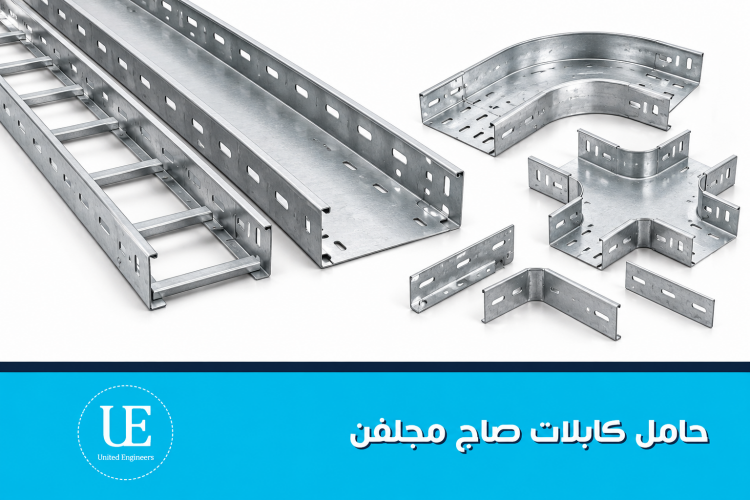
Galvanized Cable Tray: Benefits, Types and Installation Tips
Imagine the main electrical cables of your project—which could be worth millions of pounds—being exposed to damage, corrosion, or severe overheating due to poor organization, humidity, and environmental exposure. This is where the importance of a galvanized cable tray becomes evident. It provides robust support and effective protection for cables, helping organize power and telecommunication networks in commercial buildings, factories, hospitals, and large-scale infrastructure projects.
Why Choose a Galvanized Cable Tray?
The galvanized cable tray tops the list of materials used in cable management manufacturing because it delivers the perfect combination of structural durability, high corrosion resistance, and a long service life. This makes it the preferred choice for major industrial and commercial developments.
1. Superior Rust and Corrosion Resistance
The protective zinc coating resulting from the galvanizing process shields the steel sheet from moisture and harsh environmental factors that cause corrosion. Galvanization provides extra armor for the metal, particularly in industrial zones or high-humidity settings, significantly extending the lifespan of a galvanized cable tray.
2. High Load-Bearing Capacity
Galvanized steel features strong mechanical resilience, enabling the fabrication of trays capable of supporting heavy cable loads. Load capacity varies based on design, sheet thickness, tray type, and the distance between support points. Selecting the correct technical specifications minimizes sagging, prevents structural deformation, and ensures long-term cable alignment.
3. Effortless Maintenance and Future Expansion
A Galvanized sheet metal cable tray provides organized, accessible pathways that simplify routine cable inspection, maintenance, and system expansion. Adding new lines or modifying routes becomes effortless, substantially reducing structural cutting and re-piping costs compared to closed conduit systems.
When customized in terms of galvanizing type, thickness, and design to suit your specific project environment and load requirements, a galvanized cable tray serves as a practical, highly reliable investment.
To explore different cable management solutions, read our guide on cable companies to find the right option for your project.

Technical Specifications and Available Sizes
Galvanized cable tray systems come in various dimensions and sheet thicknesses to meet different engineering standards. Selecting the appropriate size depends on cable dimensions, total weight, route distance, mounting method, ventilation requirements, and future capacity planning.
|
Technical Parameter |
Common Specifications |
Recommended Application |
|
Width |
10 to 100 cm (e.g., 10, 15, 20, 30, 40, 50, 60, 80, 100 cm) |
Determined by the number and outer diameter of cables, leaving sufficient spacing for thermal cooling and future additions. |
|
Height / Flange |
5 to 10 cm (Commonly 5, 7.5, 10 cm) |
Provides lateral support to retain cables securely within the tray pathway. |
|
Thickness |
1.0 to 2.0 mm (or custom-engineered) |
Thinner sheets suit lighter loads and shorter spans; thicker gauges are required for heavy-duty power lines and longer spans. |
|
Standard Length |
Typically 3 Meters |
Optimizes transport, handling, and installation while reducing material waste during execution. |
Engineering Note: Never select a galvanized cable tray size or thickness based solely on the quantity of cables. You must account for actual cable weight, support spacing, tray structure, site conditions, and engineering guidelines to ensure structural safety and stability.
For efficient cable organization and ventilation, explore our article on cable tray accessories to understand their advantages.
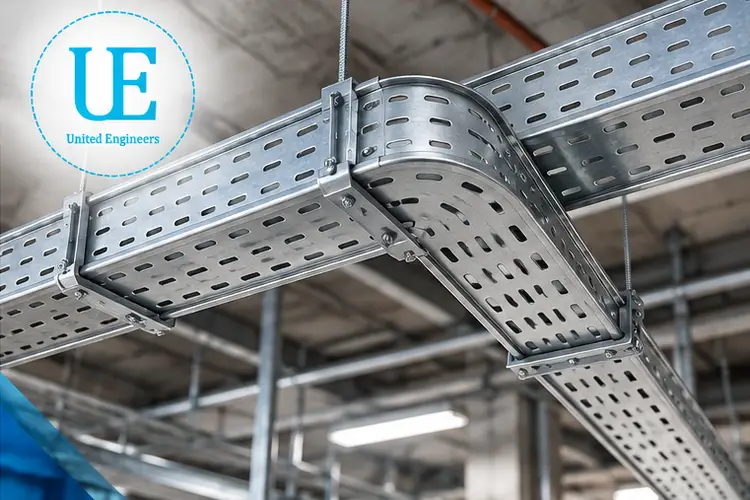
Pre-Galvanized vs. Hot-Dip Galvanized Cable Tray
Choosing the correct galvanization finish for your Galvanized sheet metal cable tray is a crucial engineering decision. It directly impacts corrosion resistance and lifespan depending on the installation environment.
|
Comparison Feature |
Hot-Dip Galvanizing (HDG) |
Pre-Galvanized (Mill Galvanized) |
|
Manufacturing Process |
The tray is completely fabricated, punched, and formed before being immersed in a molten zinc bath. |
The tray is fabricated from steel sheets that are already galvanized prior to cutting and bending. |
|
Zinc Coating Thickness |
Significantly thicker zinc layer, designed for environments requiring maximum corrosion protection. |
Thinner zinc layer, best suited for moderate indoor environments. |
|
Edges and Perforations |
Complete immersion coats all raw edges, drilled holes, and cut contours thoroughly. |
Cut edges and punched holes may expose raw steel, requiring protective zinc spray treatment for demanding applications. |
|
Corrosion Resistance |
Excellent; ideal for harsh outdoor, high-humidity, and chemical environment exposure. |
Good for dry, indoor applications; less suitable for severe environmental stress. |
|
Cost Efficiency |
Higher initial cost due to post-fabrication treatment processes. |
Highly economical for standard indoor installations. |
When Should You Use Each Type?
- Hot-Dip Galvanized sheet metal cable tray: Preferred for outdoor applications, coastal areas, industrial plants, high-humidity zones, or any project requiring high corrosion resistance and an extended service life.
- Pre-Galvanized sheet metal cable tray: Widely used for indoor environments such as administrative offices, commercial centers, hospitals, and residential developments where trays are protected from rain, moisture, and direct weathering.
Choosing the ideal galvanized cable tray comes down to environmental exposure levels, installation locations, project specifications, and approved engineering codes.
check our guide on cable tray factory Guide for helpful recommendations.
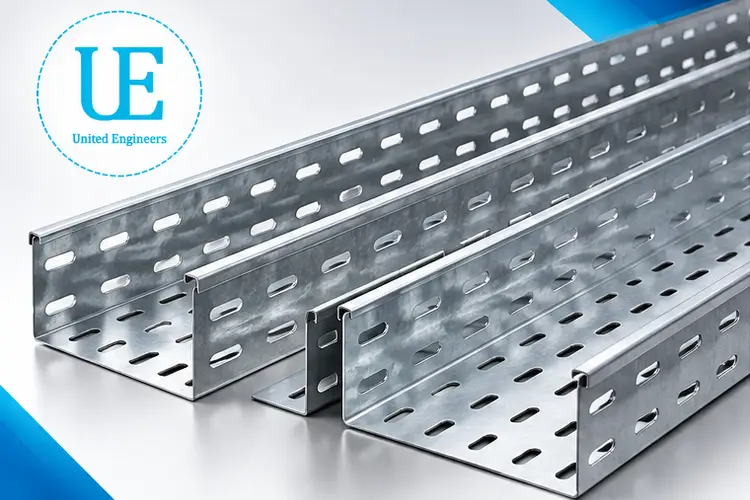
Essential Accessories for Cable Management Systems
A complete cable network involves more than just straight runs. It requires precision-engineered accessories to navigate bends, manage branch points, and protect cables across transitions.
- Bends & Elbows (Horizontal & Vertical): Used to smoothly alter tray directions at safe angles (e.g., 90° or 45°), preventing cable strain and sharp friction against metal edges.
- Tees & Crosses: Used to branch or intersect cable routes—utilizing a Tee for two-way branching or a Cross for four-way distribution across different rooms and equipment panels.
- Reducers: Allow seamless transitions between different widths (e.g., transitioning from a 40 cm to a 20 cm tray width) as cable volume decreases along the line.
- Cable Tray Covers: Fitted on top of the tray to shield cables from dust, moisture, oils, and harsh weather conditions in outdoor installations.
- Cable Trunking & Conduits: Used alongside trays for closed routing where isolated containment or complete physical encasement of sensitive wiring is necessary.
- Cable Ladder Systems: Utilized for heavy power cables requiring maximum ventilation and support over long spans, often working alongside standard tray setups.
- Fittings & Fasteners: Include threaded rods, splice plates, hold-down clamps, and unistrut channels that hold the entire structural network firmly together.
Why Partner with "United Engineers" for Cable Systems?
Selecting the right supplier for cable management systems and your galvanized cable tray requirements is as vital as the engineering design itself. United Engineers offers comprehensive solutions that enhance project efficiency while minimizing installation time and operational costs.
Benefits of Choosing United Engineers:
- Prompt Delivery & Readiness: Strict commitment to delivery schedules ensures your Galvanized sheet metal cable tray orders and accessories arrive on site on time, keeping your project schedule uninterrupted.
- Superior Quality & Code Compliance: Advanced manufacturing techniques, including precision CNC machinery and certified galvanization processes, guarantee exact dimensions, structural integrity, and strict adherence to international engineering standards.
- Complete Cable Management Ecosystem: From perforated and solid-bottom trays to Cable Ladder configurations, Cable Trunk systems, and certified mounting accessories, United Engineers delivers a fully integrated infrastructure package.
- Expert Technical Support: Our engineering team provides hands-on consultation for selecting optimal sizes, sheet thickness, and load calculations, ensuring maximum cost efficiency and minimal material waste.
Whether you are executing an industrial plant, a commercial tower, or a critical infrastructure facility, specifying a high-grade galvanized cable tray system ensures long-term electrical safety and operational efficiency.
Get Started with United Engineers Today: Contact the expert engineering team at United Engineers to receive technical consultation and request a customized price quote tailored to your project requirements.
Frequently Asked Questions (FAQ)
Can custom sizes of a galvanized cable tray be manufactured?
Yes. Non-standard dimensions can be custom-engineered using CNC precision bending and rolling technologies to accommodate unique architectural layouts, space constraints, or unusual cable load demands.
How do you calculate the load capacity of a cable tray?
Sum the Total Weight: Calculate the total weight per meter of all combined cables (weight/meternumberofcables).
Apply a Safety Factor: Add a 20% to 25% safety margin to account for thermal cooling spacing and future cable expansions.
Select Thickness and Support Span: Choose the appropriate sheet gauge (e.g., 1.2 mm, 1.5 mm, or 2.0 mm) and support hanging distance (typically 1.5 to 2 meters) according to the manufacturer's certified Load Capacity Chart.
What is the best method to install suspended cable trays?
The most reliable and standard method involves using a threaded rod suspension setup paired with unistrut support channels:
Secure drop-in concrete anchors into the ceiling slab.
Install threaded rods of suitable diameter (commonly 8 mm, 10 mm, or 12 mm).
Mount a C-Channel / Unistrut channel under the tray, secured with galvanized nuts and washers to guarantee total equilibrium and stability.